Academics
Carolina Collegiate Academy is designed to provide a rigorous academic experience within a small, focused learning environment. The program combines structured instruction, hands-on learning, and independent study to help students develop strong academic foundations and the ability to think critically across disciplines.
The academy follows a university model, allowing students to benefit from both guided instruction and independent learning. What students study in science connects to what they write in humanities. What they analyze in history strengthens how they construct an argument. Learning at CCA is intentionally integrated rather than artificially separated into disconnected subjects.
Academic Structure
Students attend in-person classes two days each week for direct instruction, collaborative learning, and laboratory work. These days provide the foundation for each subject area and allow students to engage with material through discussion, guided practice, and hands-on activities.
During the remaining days of the week students complete reading assignments, research, writing, and independent practice at home. This structure supports the flexibility many homeschool families value while maintaining a clear academic framework and expectations.
This balance between structured instruction and independent learning encourages students to take increasing responsibility for their education as they progress through the program — a habit that serves them well in college and beyond.
The Four Year Cycle
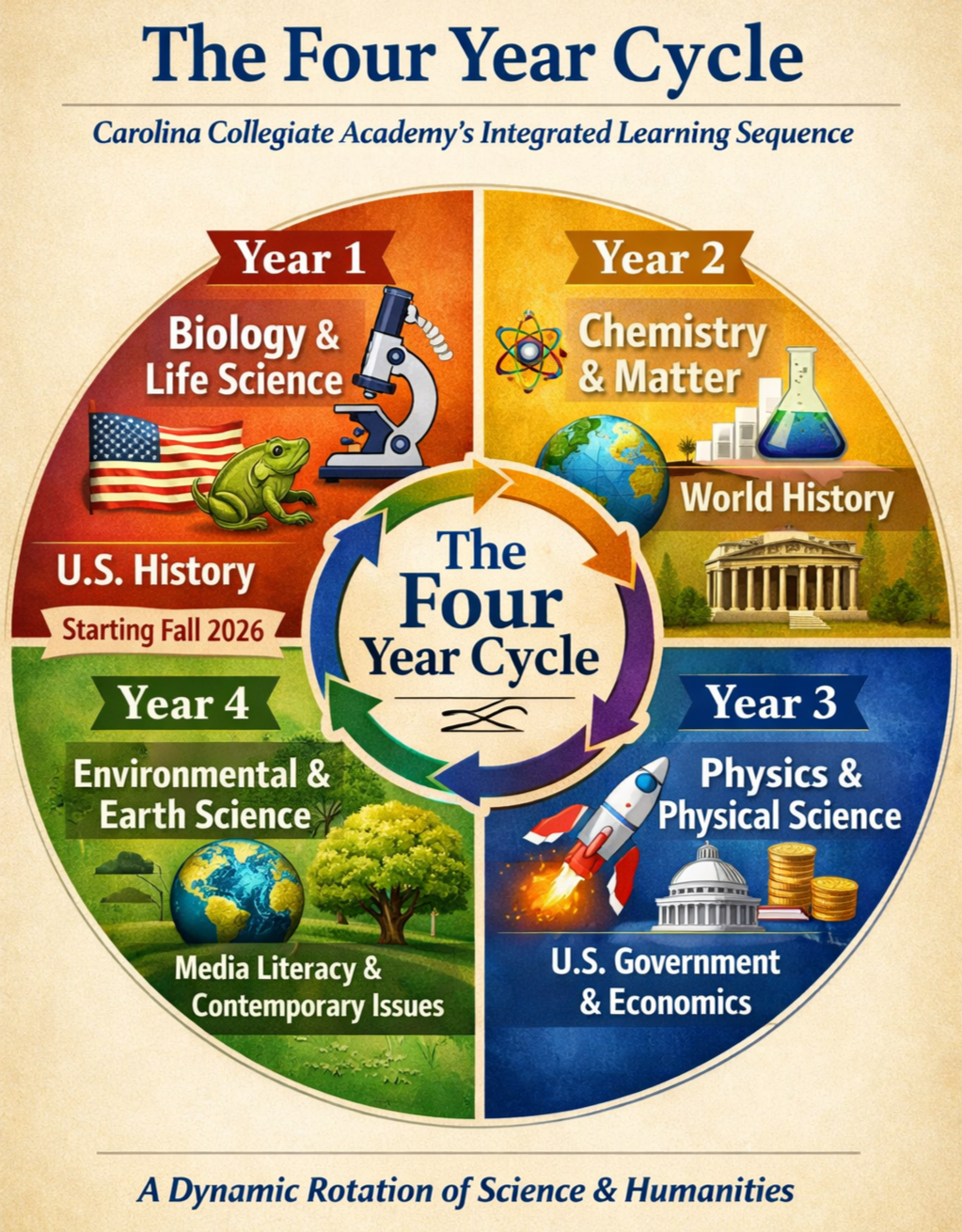
Carolina Collegiate Academy follows a four-year academic cycle that integrates scientific study with humanities exploration. This structure allows students at different grade levels to learn together while ensuring that all major areas of secondary education are addressed over time.
Students may enter the program at any point in the cycle. As they continue through the program they experience each year of the sequence, building knowledge and skills with increasing depth and complexity. This rotating structure ensures that every student develops a broad and meaningful academic foundation regardless of when they begin.
Core Areas of Study
The academic program at Carolina Collegiate Academy focuses on four core areas that work together to provide a well-rounded education.
Mathematics
Mathematics instruction focuses on building strong reasoning and problem-solving skills. Students work through structured lessons and guided practice while learning to apply mathematical thinking to real-world situations.
Science
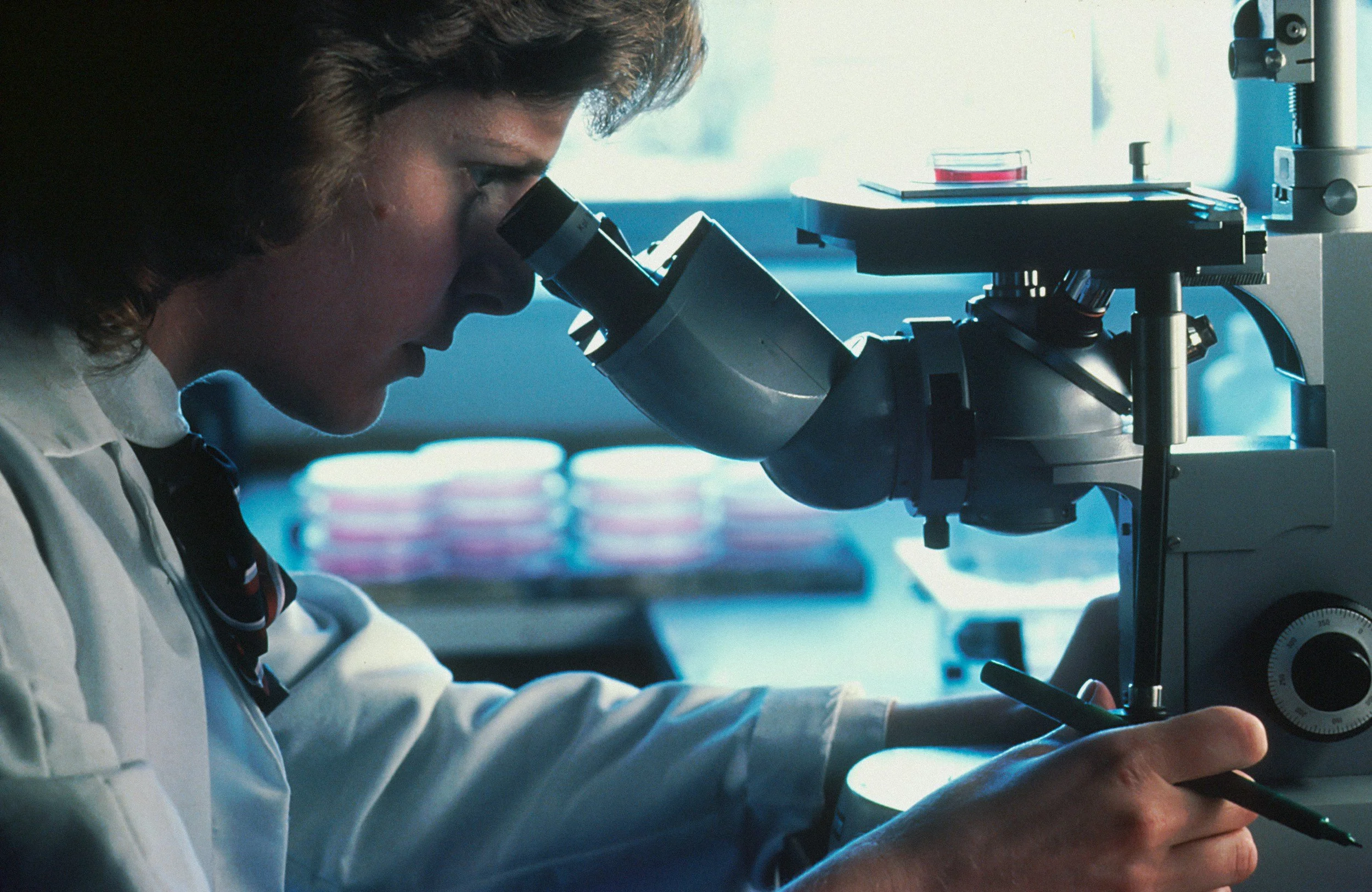
Science courses emphasize hands-on exploration. Students participate in regular laboratory investigations designed to help them understand how scientific knowledge develops through observation, experimentation, and analysis.
Hands-on labs, demonstrations, and research activities are central to the science program.
Humanities
The humanities program integrates language arts and social studies to explore literature, writing, and historical study together. Students examine primary and secondary sources, engage in analytical and creative writing, and explore how ideas and events shape societies over time.
This integrated approach helps students see connections between history, culture, and the written word.
STEM and Applied Learning
Applied learning is an important part of the academy’s academic philosophy. STEM activities encourage students to engage with engineering, technology, and problem-solving in ways that connect academic knowledge to real-world applications.
Projects may include engineering challenges, research investigations, and collaborative design work.